

“Every year, my weight just seems to creep up.”
This is something I hear regularly when speaking with new clients at Mind Performance Health.
It might only be a few kilos at first.
Then another few kilos.
Before you know it, you look back over the last three, five or ten years and realise you're 10, 15 or 20kg heavier than you used to be.
And what's interesting is that this is happening during a time when we've never had more information about health and fitness.
You can open your phone and find thousands of workouts.
You can ask AI to write you a meal plan in seconds.
You can track your calories, steps, sleep and heart rate from your wrist.
We have weight-loss medications. We have bariatric surgery. We have more gyms, diets, apps and health information than ever before.
So why are so many people still struggling with their weight?
I believe one of the biggest things we're overlooking is our environment.
Think about how much physical activity has gradually been removed from everyday life.
You can work from home without leaving the house.
You can order your groceries from your phone.
You can have almost any meal delivered directly to your door.
You can shop online.
You can automate household jobs.
You can drive almost everywhere.
Technology will continue making more of our daily tasks easier.
That's great for convenience.
But it's not necessarily great for our waistlines.
For many busy professionals, eight or ten hours of the day can disappear behind a computer.
Then you drive home, sit down for dinner and relax on the lounge because you're mentally exhausted from work.
You might have worked incredibly hard that day.
But physically?
You've barely moved.
That's an important distinction.
I think we need to be careful about relying on willpower as the solution.
It's easy to say:
“I just need to be more disciplined.”
But if your entire environment makes inactivity and overeating easier, you're asking yourself to constantly fight against what's around you.
Imagine two environments.
In the first, you sit for most of your working day, takeaway is one click away, your social life revolves around eating and drinking, nobody around you exercises, and there's no accountability when you skip training.
In the second, your training sessions are booked into your calendar, your nutrition is planned, you're surrounded by people working towards similar goals, your progress is measured and someone notices when you stop showing up.
Which environment do you think makes staying in shape easier?
That's why environment matters so much.
This is another important point.
Most people don't suddenly wake up 15kg heavier.
It happens gradually.
Your daily movement drops.
Training becomes less consistent.
Portion sizes increase.
A few more meals out creep in.
Work becomes stressful.
Weekends become more relaxed.
You gain a little weight.
Then a little more.
Because the change is gradual, it's easy to ignore.
Until one day your clothes don't fit properly, your energy isn't what it used to be, or you see a photo of yourself and realise how much you've changed.
That's when many people try to fix several years of gradual weight gain with an aggressive eight-week diet.
But unless you change the environment and behaviours that contributed to the weight gain in the first place, it's very easy to end up back where you started.
This is particularly relevant today.
We have almost unlimited access to information.
Most professionals I speak with already understand the basics.
They know vegetables are good for them.
They know protein is important.
They know they should exercise.
They know walking is better than sitting all day.
They know eating takeaway every night probably isn't helping.
The problem often isn't knowledge.
It's execution.
Knowing what to do and consistently doing it when you're tired, busy, stressed and surrounded by convenience are two very different things.
You probably don't need another 50 fitness videos saved on Instagram.
You need a system that makes the right behaviours easier to repeat.
Motivation is useful when it's there.
Use it.
But don't build your entire health strategy around feeling motivated.
There will be mornings when you don't want to train.
There will be stressful weeks at work.
There will be dinners, holidays, deadlines and family commitments.
That's normal.
Your environment and your standards are what keep you moving when motivation disappears.
If training is already booked into your week, there's less decision-making.
If your meals are planned, there's less chance of ordering whatever is easiest when you're starving.
If somebody is measuring your progress, it's harder to ignore several months of weight gain.
If the people around you value training and looking after themselves, those behaviours start to feel normal.
Make your environment do some of the work for you.
If your weight has been slowly increasing, don't just tell yourself to “try harder.”
Start changing what's around you.
Treat training like an important meeting.
Decide when you're training before the week begins instead of waiting to see when you have time.
Because for most busy professionals, that spare time never magically appears.
Have someone who knows your goals and can objectively measure whether you're moving towards them.
That might be a coach, training partner or structured program.
It's much harder to let three months disappear when someone else is paying attention.
If you work at a desk, deliberately create reasons to move.
Walk during phone calls.
Take a short walk at lunch.
Use the stairs.
Walk after dinner.
Set a daily step target.
Small amounts of movement repeated every day can make a meaningful difference over time.
Convenience isn't going away.
So use it to your advantage.
Have high-protein meals available.
Keep better food choices at home.
Plan meals before you're hungry.
Don't make every good nutrition decision require willpower.
Make the healthier option the easy option.
The people and environments you spend time around influence what feels normal.
If everyone around you trains, looks after their nutrition and values their health, those behaviours become easier to maintain.
You don't need to remove everyone from your life who doesn't train.
But you should deliberately spend some of your time in environments that reinforce the person you're trying to become.
If your weight has been increasing year after year, don't wait until another five years have passed before doing something about it.
Weight gain isn't only about appearance.
Over time, carrying excess body fat can increase the risk of several chronic health problems and can make becoming active again increasingly difficult.
And you don't need to completely overhaul your life tomorrow.
Start by changing the direction.
Train consistently.
Move every day.
Improve your food environment.
Track your progress.
Create accountability.
Surround yourself with people who support the standard you're trying to maintain.
At Mind Performance Health in Rouse Hill, this is a major part of what we provide our clients.
Yes, we coach training and nutrition.
But we also create an environment where busy professionals have structure, accountability, measurable goals and people around them who are working towards improving themselves too.
Because in today's world, information isn't difficult to find.
The harder part is consistently doing what you already know you need to do.
And sometimes the smartest way to change your behaviour isn't to demand more willpower from yourself.
It's to change the environment around you.
---
At Mind Performance Health our personal training team is equipped to help you achieve the best health and fitness results possible. Some clients wish for a 'head turning' 6 pack transformation. Other clients want lifestyle improvements that include vitality, body fat loss, strength and confidence. Either way we are passionate to help you achieve your desired goals.
CLICK HERE TO FILL OUT ONE OF OUR CONTACT FORMS
Our exclusive personal training studio is located at: 8/591 Withers Road, Rouse Hill NSW Australia.
Mind Performance Health helps busy professionals, parents, and families across Rouse Hill, Kellyville, Box Hill, The Ponds, Schofields, Beaumont Hills, and Northwest Sydney lose body fat, build muscle, improve energy, and create lifelong healthy habits.
Eat For Performance. Train Hard.
Michael Pritchatt
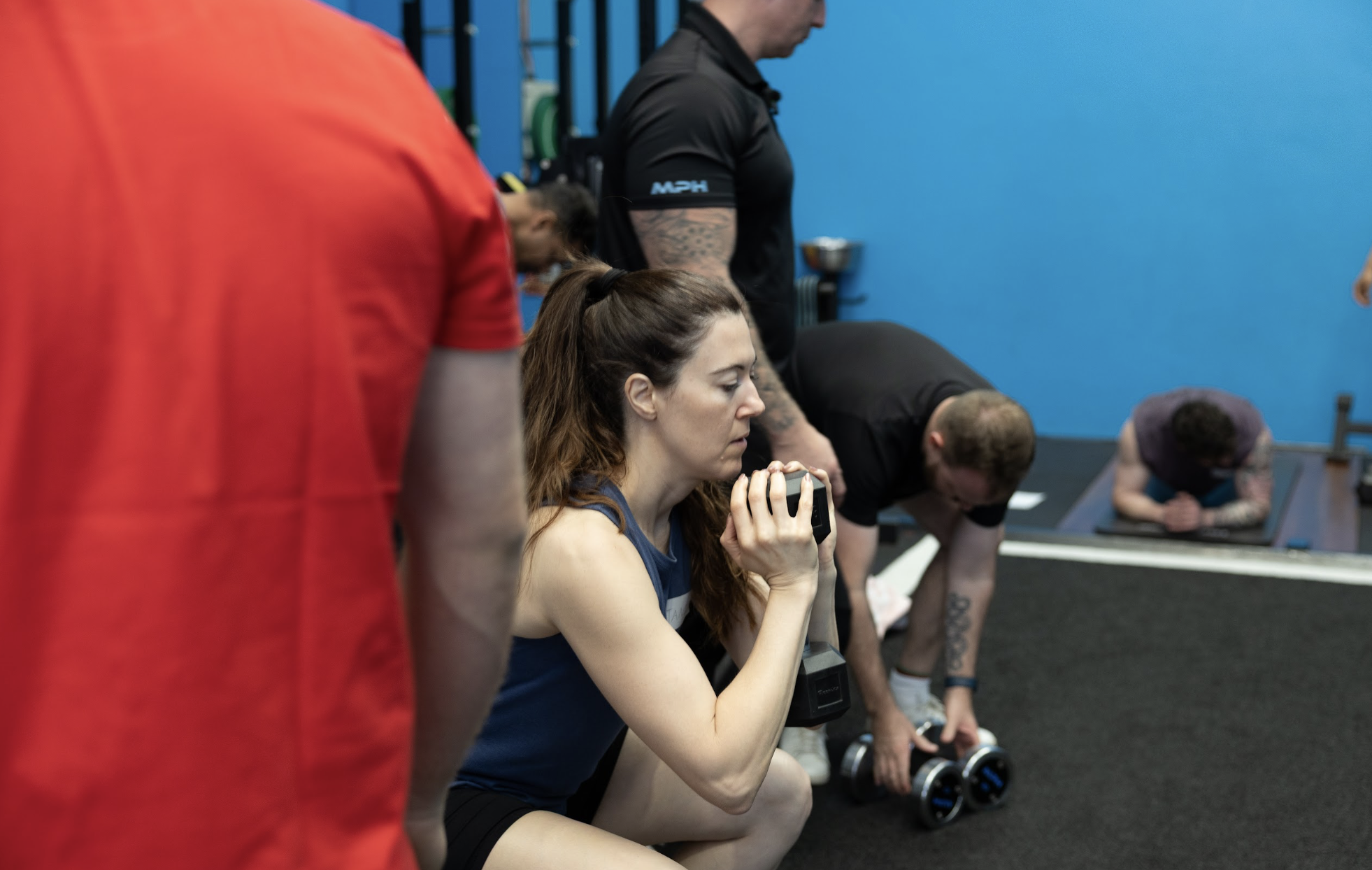
Your clothes are getting tighter, you're feeling more sluggish, your joints aren't as comfortable as they used to be, and you're not particularly happy with....
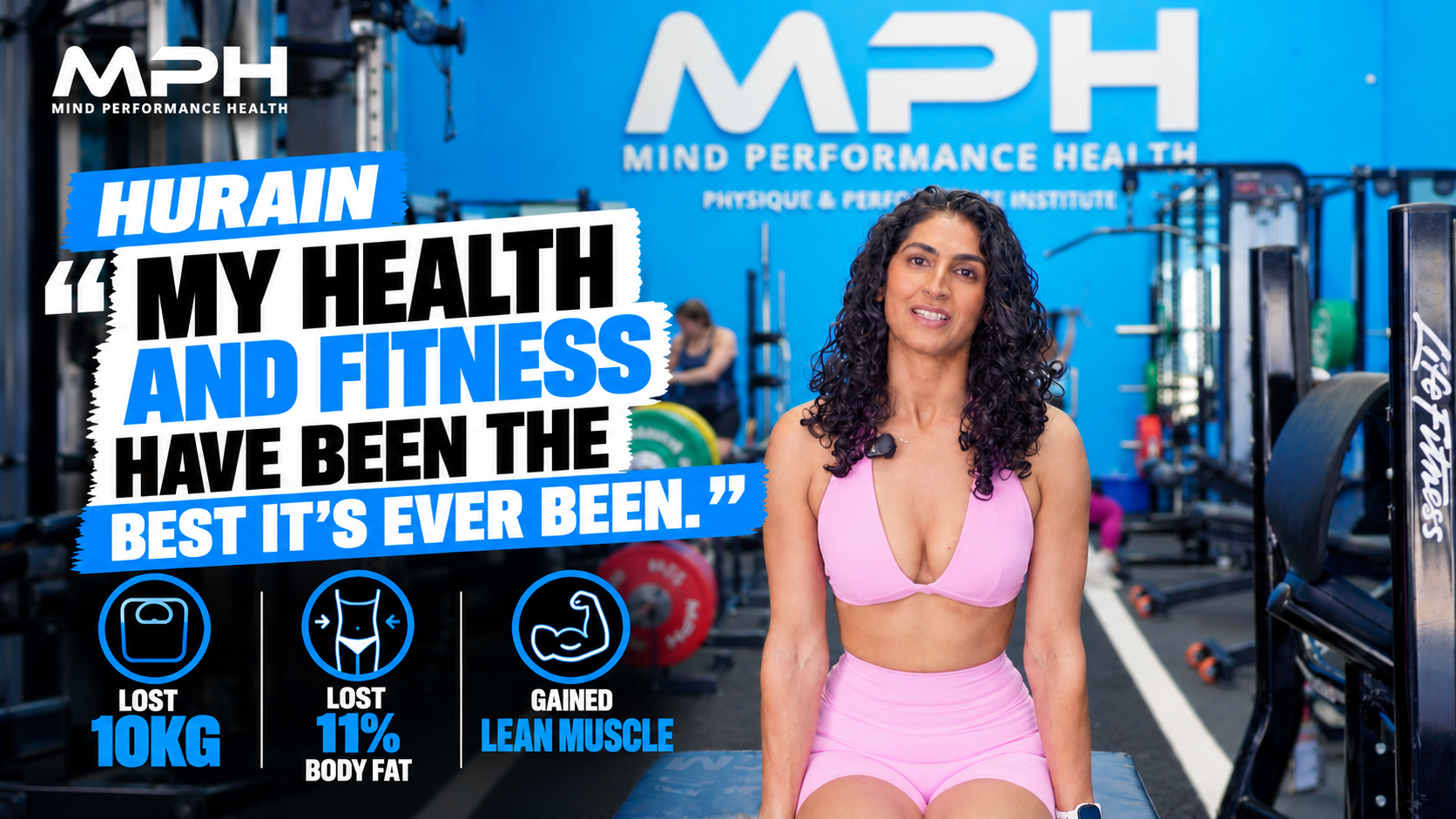
What started as a journey to lose body fat, build strength and improve confidence turned into something much bigger for Hurain.

Client results are produced by dedication executing our nutrition, workouts and lifestyle tasks to the best of their ability. We cannot eat, train or follow the plan for you. We can however provide you the steps that are tailored to you, bestow support and give you accountability as we are invested in your success.
Each client has their own unique results. Our goal is to maximise your genetic potential with our personal training service. We all have different genetics and starting points. Your result will be your own.
All clients you see on our website were committed to their results, worked hard, followed the plan consistently and made the decision to give their best effort over time to create the results you see.

Frustrated by stubborn fat, tight clothes, and low energy? Tired of quick fixes and yo-yo diets? Learn the proven methods to transform your body and confidence for good.
Download Now →


